
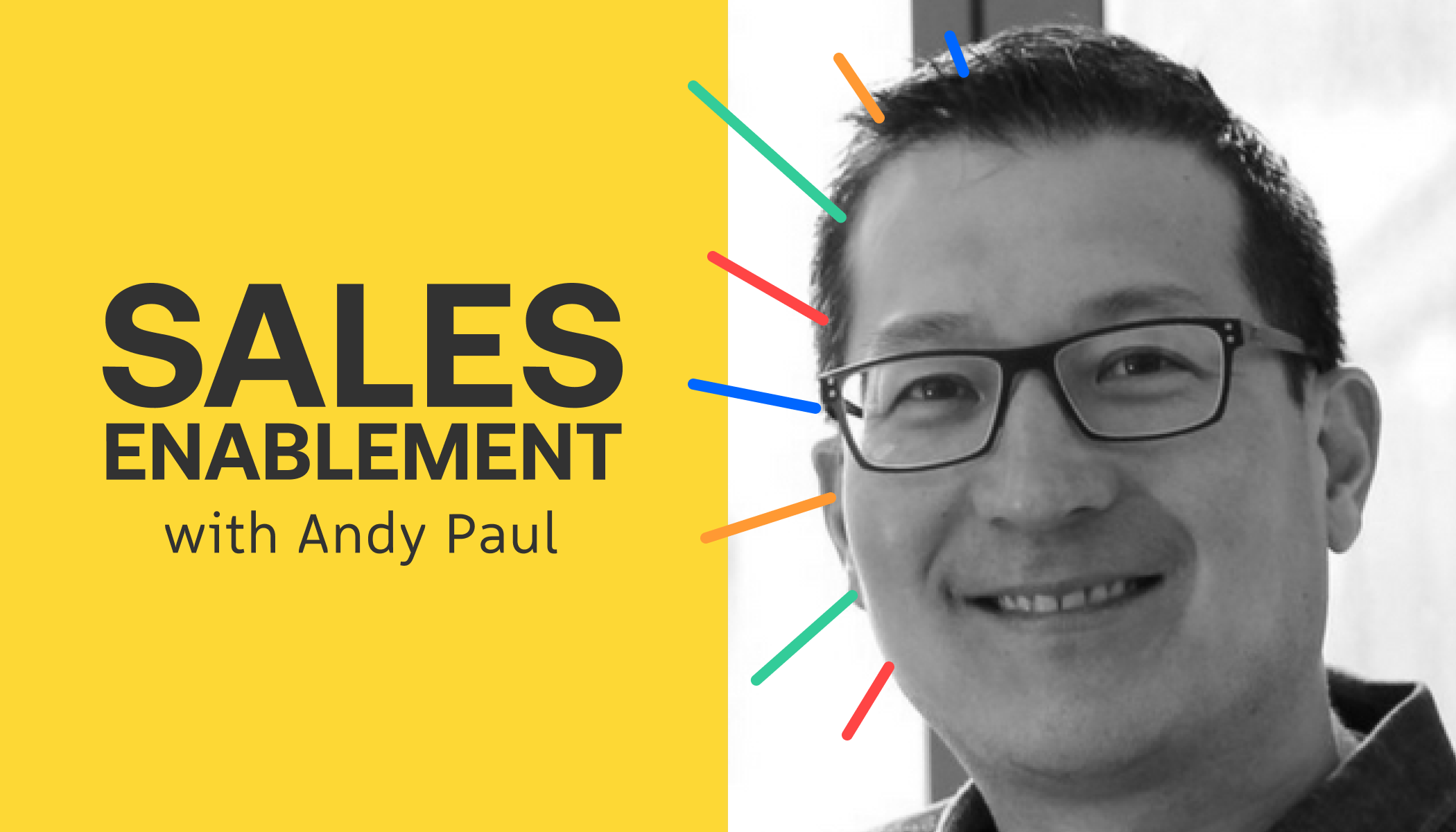
Let AI Nudge You into Sales Relationships. With Paul Teshima [Episode 515]
Podcast Host: Andy Paul
Guest: Paul Teshima, Co-Founder and CEO of Nudge.ai
About the Guest
Paul Teshima is the Co-Founder and CEO of Nudge.ai, a relationship intelligence platform designed to help sales teams identify the connections and insights needed to engage buyers more effectively.
Paul has spent much of his career working at the intersection of sales, technology, and artificial intelligence. His work focuses on helping sellers better understand the networks and relationships that influence buying decisions. Through Nudge.ai, he aims to help sales professionals uncover relationship insights that can open doors, strengthen trust, and accelerate the buying process.
TLDR
Paul Teshima explains how AI can help sales teams uncover relationship insights, identify key connections inside target accounts, and stay top-of-mind with prospects. By automating research and analysis, AI can free up sellers to focus on what matters most: building real relationships.
Episode Summary
In this episode of the Sales Enablement Podcast, Andy Paul speaks with Paul Teshima, Co-Founder and CEO of Nudge.ai, about how artificial intelligence can help sales teams improve relationship-driven selling.
Paul begins by discussing one of the biggest challenges facing sales professionals today: buyers have access to more information than ever before. In the past, sellers could create value simply by sharing information about their products or services. Today, that advantage has largely disappeared.
Instead, the new opportunity for sellers lies in understanding relationships and influence inside target accounts. Nudge.ai was built to help sales teams identify these connections and provide insight into how relationships can help sellers access decision-makers and influence buying decisions.
Paul explains that the most practical applications of AI in sales are not flashy automation tools, but systems that handle repetitive analytical work behind the scenes. For example, AI can analyze large volumes of data to identify relevant signals, monitor relationship networks, and suggest which prospects a rep should engage with next.
The conversation also explores how modern sales stacks can sometimes push reps toward rigid processes that reduce authentic customer interaction. Paul argues that while automation can improve efficiency, the best sales performance still comes from human relationships and meaningful conversations.
AI should therefore support sellers by removing research tasks and surfacing useful insights, allowing reps to spend more time with customers and develop stronger relationships.
Key Topics Covered
-
Why modern buyers are more informed than ever
-
The role of relationship intelligence in sales
-
How AI can automate research and data analysis
-
Why sales stacks sometimes reduce relationship-building
-
The difference between actionable insights and information overload
-
Where AI can improve efficiency in sales teams
-
How nudges help maintain momentum in the sales process
Key Takeaways
-
Buyers already have access to product information.
Sellers must create value through insights and relationships rather than information alone. -
Relationship intelligence helps open doors.
Understanding connections between people and companies can help sellers reach the right stakeholders. -
AI is best used for behind-the-scenes analysis.
The most useful AI tools automate research and highlight signals that matter to sales teams. -
Automation should support relationships, not replace them.
AI can free up time for sellers to build stronger customer connections. -
Sales stacks can sometimes over-standardize behavior.
Rigid processes can limit a seller’s ability to adapt to the buyer’s needs. -
Momentum matters in sales.
AI-driven nudges help reps stay top-of-mind with prospects during slower parts of the buying cycle.
Who This Episode Is For
-
Sales leaders exploring AI in their sales tech stack
-
SDRs and AEs looking for better prospect research tools
-
RevOps teams building modern sales intelligence workflows
-
Founders building relationship-driven sales motions
-
Sellers focused on strategic account engagement