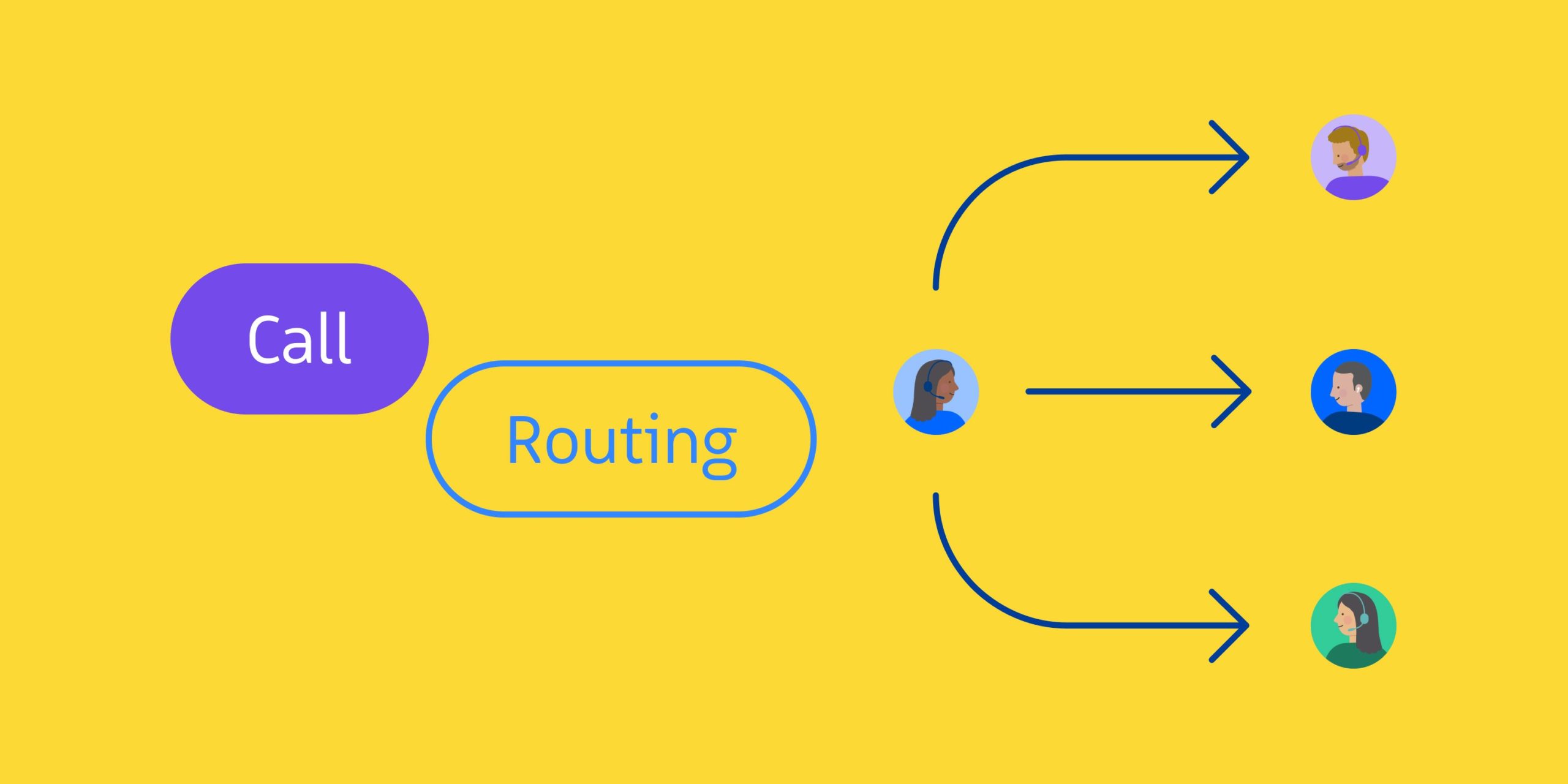
Call routing is the process of directing incoming or outgoing phone calls to a specific destination based on predefined rules. These rules determine where a call should go, whether to an individual agent, department, voicemail inbox, or external number.
The further definition of a call routing system – also known as an automatic call distributor or ACD – describes a tool that can route calls to individual agents or queues based on preestablished criteria such as the time of day that a caller dials a business. While routing engines began as hardware solutions, they have evolved over time. Now, many routing engines are part of a computer telephony integration system (CTI). A CTI-based routing engine enables users to quickly adjust routing rules, and the best cloud-based routing engines enable routing rules to be adjusted without any IT assistance. There are many levels of sophistication to routing engines. The most powerful ACDs can integrate with a call tracking solution in order to automatically route calls based on specific advertising channels and even from specific Google keywords.
At its core, call routing improves efficiency, reduces wait times, and ensures callers reach the appropriate destination quickly.
How Call Routing Works
Call routing systems operate using predefined logic within a telephony or VoIP platform.
When a call enters the system:
-
The call is received by the telephony provider or cloud communication platform.
-
The system evaluates routing rules configured by administrators.
-
Based on those rules, the call is directed to a destination such as:
-
A specific agent
-
A department queue
-
A voicemail box
-
An IVR menu
-
An external phone number
Routing decisions may rely on factors such as:
-
Agent availability
-
Business hours
-
Geographic region
-
Caller input via IVR
-
Account status in a CRM
-
Priority or service tier
Modern call routing systems often integrate with CRM platforms, allowing intelligent routing based on customer data. For example, high-value accounts may be routed directly to senior representatives.
If no destination is available, calls may be placed in a queue, forwarded to voicemail, or redirected according to fallback rules.
Types of Call Routing
There are several routing strategies used across sales and support organizations:
Time-Based Routing
Time-based routing directs calls according to predefined business hours, time zones, or scheduled availability windows. Instead of treating all inbound calls equally throughout the day, this routing method ensures calls are handled appropriately depending on when they are received.
For example, during standard business hours, calls may route to live agents or department queues. After hours, calls may be redirected to voicemail, an outsourced support center, or an on-call escalation team.
Time-based routing is especially valuable for organizations that:
-
Operate across multiple time zones
-
Maintain 24/7 support coverage
-
Have different weekday and weekend staffing models
-
Need holiday-specific routing adjustments
By aligning routing logic with operational schedules, time-based routing prevents missed calls, reduces caller frustration, and ensures consistent service coverage.
Geographic Routing
Geographic routing directs calls based on the caller’s physical location, typically determined by area code, country code, or regional data. This method ensures callers are connected with representatives in the same region or territory.
Organizations often use geographic routing to:
-
Assign leads to territory-based sales representatives
-
Connect customers to region-specific support teams
-
Route international calls to local-language agents
-
Improve compliance with regional regulations
For distributed revenue teams, geographic routing helps maintain territory ownership and ensures inbound opportunities are handled by the appropriate account executive. It can also improve caller comfort by connecting them with agents familiar with regional nuances or local regulations.
Round Robin Routing
Round robin routing distributes inbound calls evenly across available agents in a rotating sequence. Instead of prioritizing one agent over another, the system cycles through the agent list to balance workload distribution.
This approach is commonly used in smaller sales or support teams where:
-
Agent skill sets are relatively similar
-
Call complexity is standardized
-
Fair distribution of opportunities is important
Round robin routing promotes equity and prevents individual agents from becoming overloaded while others remain idle. However, it does not account for specialization, which makes it less effective in environments requiring technical or language-based expertise.
For teams focused on fairness and balanced opportunity allocation, round robin routing provides a simple and efficient solution.
Skill-Based Routing
Skill-based routing connects callers with agents who possess specific expertise, certifications, product knowledge, or language capabilities. Instead of routing calls randomly, the system evaluates predefined skill tags and matches the caller to the most qualified representative.
Common skill-based routing scenarios include:
-
Technical support escalations
-
Enterprise account management
-
Language-specific support
-
Industry-specific sales inquiries
This routing method improves first-call resolution rates by reducing transfers and ensuring callers are connected to someone equipped to handle their request. In revenue environments, it can also improve close rates by pairing complex opportunities with experienced account executives.
Skill-based routing is more sophisticated than round robin models and is typically used in structured contact centers or larger sales organizations.
Priority Routing
Priority routing assigns higher queue placement or immediate routing to specific callers based on predefined importance criteria. Instead of treating every call equally, this method ensures that high-value or urgent interactions are handled first.
Priority criteria may include:
-
VIP customer status
-
Enterprise account designation
-
Open support tickets with escalation flags
-
Inbound calls tied to active sales opportunities
-
Service-level agreement (SLA) requirements
For example, a top-tier customer may bypass standard queues and connect directly with a dedicated account manager. In sales environments, inbound calls from late-stage prospects may receive immediate routing to improve speed-to-conversion.
Priority routing helps organizations protect revenue opportunities and maintain service commitments while still managing overall call volume effectively.
Call Routing Types Comparison Table
Below is a comparison of common routing types and their best use cases:
| Routing Type |
Best For |
Complexity Level |
Common Use Case |
| Time-Based |
Business hour control |
Low |
After-hours handling |
| Geographic |
Regional teams |
Low–Medium |
Multi-location businesses |
| Round Robin |
Balanced workloads |
Low |
Small sales teams |
| Skill-Based |
Specialized support |
Medium |
Technical support centers |
| Priority |
VIP customers |
Medium |
Enterprise service tiers |
| Least Occupied |
Efficiency optimization |
Medium |
High-volume teams |
| IVR-Based |
Intent-based routing |
Medium–High |
Contact centers |
Simple routing rules work well for small teams. Larger organizations often combine multiple strategies to create layered routing logic.
Benefits of Call Routing
Call routing improves efficiency by automatically directing calls to the right destination without manual transfers.
Reduced Wait Times
Intelligent routing connects callers to the correct agent faster, minimizing hold time and reducing unnecessary transfers.
Increased Agent Productivity
By distributing calls based on availability or skill set, routing prevents overload while reducing idle time.
Faster Speed-to-Lead
Inbound sales calls can be routed instantly to the correct territory rep or account owner, improving conversion rates.
Better Customer Experience
Callers reach someone equipped to help them on the first attempt, increasing satisfaction and resolution rates.
Improved Visibility
Modern routing systems provide reporting on queue times, abandonment rates, and call volume patterns.
Scalability
Routing rules can be adjusted as teams grow, without adding hardware or restructuring telecom systems.
Call Routing vs Hunt Groups
Call routing directs incoming calls to the appropriate destination based on rules such as time of day, caller input, agent availability, or business logic.
Hunt groups route calls to a predefined group of agents and ring them in a specific pattern until someone answers.
In practice, call routing is the broader system used to manage how calls move through a phone system, while a hunt group is one specific method used within that system to distribute calls among available agents.
How Revenue.io Supports Call Routing
Revenue.io supports call routing through Call Flows and Call Queues in the RingDNA Communications Hub, allowing organizations to automatically direct inbound calls to the appropriate agents, teams, or destinations.
These routing capabilities help businesses control how calls move through the phone system based on logic such as time of day, caller location, agent availability, or CRM data.
Call Flows (IVR and Logic-Based Routing)
Administrators can configure routing logic using the Call Flow builder, which allows teams to define how inbound calls should be handled step by step.
Common routing steps include:
-
Dial – Route calls to specific users, call queues, skills groups, Salesforce record owners, or external phone numbers
-
Greeting / Menu – Create IVR prompts that allow callers to choose options using keypad input
-
Time – Route calls based on business hours, shifts, or holiday schedules
-
Branch – Route calls based on conditions such as caller location, area code, or other variables
Multiple Smart Numbers can be connected to a single call flow, allowing organizations to standardize routing across multiple inbound numbers.
Call Queues (Group-Based Routing)
Call queues are groups of users who receive inbound calls routed from call flows or directly from smart numbers.
Within a queue, administrators can define how calls are distributed among agents.
Available routing strategies include:
-
Simulring – Rings all available agents at the same time
-
Sequential Dialing – Routes calls to agents in a round-robin order
-
Longest Waiting Agent – Sends calls to the agent who has been idle the longest
-
Longest Waiting Agent with Call Parking – Places callers on hold while routing to the longest idle agent
Queues are commonly used within call flows to manage inbound volume across teams.
Centralized Call Routing Controls
Administrators manage routing configuration in the Admin Console under:
Products → RingDNA → Call Routing
From here, teams can configure:
These settings allow organizations to maintain centralized control over inbound call routing.
Examples of Advanced Routing
Revenue.io supports a wide range of routing scenarios commonly used by sales and support teams.
Examples include:
-
Business-hours routing that directs calls differently during open and closed hours
-
Geographic routing based on caller area code or country
-
Salesforce-driven routing based on CRM data such as territory, account owner, or opportunity status
-
Skill-based routing that directs calls to agents with specific expertise
By combining call flows, queues, and routing logic, Revenue.io enables flexible call routing that adapts to team structure, availability, and customer needs.
Route Smarter with CallerDNA by Revenue.io
CallerDNA by Revenue.io uses real-time intent data and caller intelligence to identify who is calling, why they’re calling, and how they should be routed. Instead of relying on static rules alone, CallerDNA enables intelligent call routing based on buyer behavior, account status, and revenue priority.
Deliver faster connections, smarter routing, and higher conversion rates with CallerDNA.